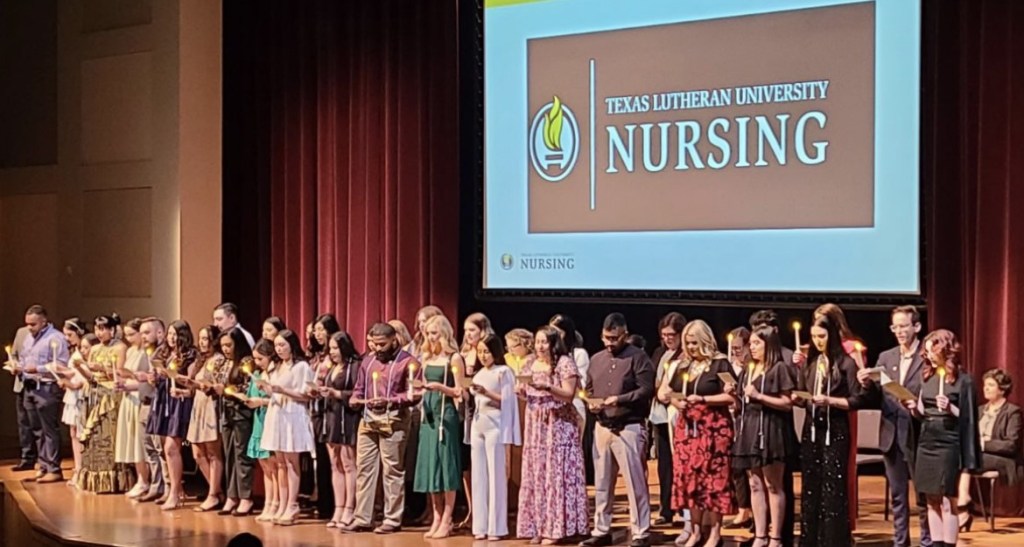
“Great leaders are not the best at everything. They find people that are the best at different things and get them all on the same team.” Eileen Bristisky

Leadership is a Virtue
Leadership can be seen as the virtue of inspiring others. John Quincy Adams was once quoted, “If your actions inspire others to dream more, learn more, do more and become more, you are a leader.” The urgency for strong leadership is no more needed than now post-pandemic living in a nursing shortage crisis. As nurse educators, we are building the nurse leaders for tomorrow daily. To build a dedicated team, leaders must be able to view someone else’s strengths as a compliment to their weaknesses, and not a threat to their position or authority. Leaders like this can be hard to come by. Just recently, one of the most inspiring and influential leaders was selected to take on the interim role as the Director of the Nursing Program at Texas Lutheran University. For this assignment, I will use the quantitative data from three of the articles to formulate and support an argument about what defines a strong leader in academia, such as Dr. Amy Hart.
Together We Lead- Authentic Leadership
Leaders who can relate to their teams, motivate, and inspire action are critical to success. To begin, Dr. Hart utilizes authentic leadership as a leadership style. Authentic leadership is exhibited by leaders who have integrity. Authentic leaders place the organizational goal in front of personal goals. Dr. Hart’s compassion and dedication to the nursing program and the team has earned the trust of their employees, peers, and shareholders. This has cultivated a shared learning environment and an approachable work environment of safety, shared learning, and boosted overall team performance.
Authentic leadership comprises four components, which are self-awareness, genuine communication and transparency, growth and development, and an internalized moral and ethical perspective. For a leader to be considered authentic, all four components must be present, with self-awareness serving as the foundation. As an example, Dr. Hart, by being self-aware, can openly show her true self to team members, which allows the team to have open discussions daily and remain in line with our moral values and departmental goals. As a leader for the nursing department, she is genuinely concerned and invested with her followers and fellow professors’ professional development, which creates trusting relationships, through showing self-awareness and relational transparency.
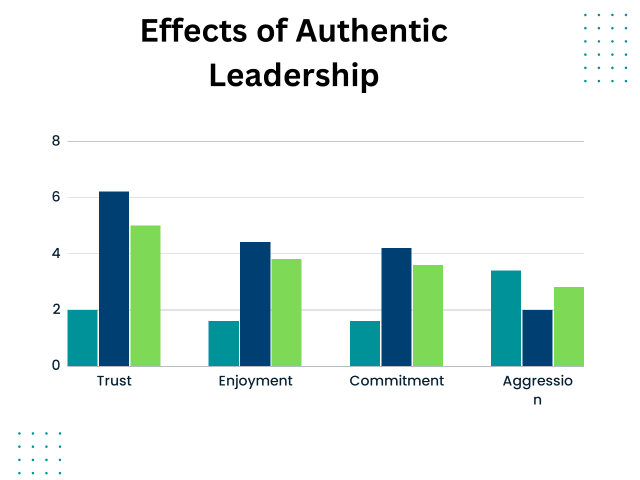
According to an experimental study on the effects of authentic leadership on athlete outcomes “show that coaches with authentic leadership could promote trust, enjoyment, and commitment to the team” (Malloy, Kavussanu, & Mackman, 2023). The purpose of the study was to investigate the effects of authentic leadership on a range of athlete outcomes in an experimental setting (Malloy, Kavussanu, & Mackman, 2023). There was a total of 129 participants with the mean age 19.36, 76 females, 53 males, that were randomly assigned to a high, low, or neutral authentic leadership condition (Malloy, Kavussanu, & Mackman, 2023). The study examined the influence on participants’ trust, enjoyment, commitment, cheating, aggression, and anticipated guilt for cheating and aggression (Malloy, Kavussanu, & Mackman, 2023). The results indicated that participants in the high authentic leadership condition reported they would feel greater trust, be more committed, experience greater enjoyment, and be less likely to be aggressive compared to participants in the low and neutral authentic leadership conditions (Malloy, Kavussanu, & Mackman, 2023). These findings suggested that authentic leadership could promote trust, enjoyment, and commitment, and reduce aggression in sport.
As far as application to the world of academia at the University level, authentic leadership can establish trust and commitment, enhance enjoyment, and increase team production. Dr. Hart’s use of transparency, genuineness, and honesty has built genuine relationships with employees, inspiring trust, and fostering a positive work environment. Her use of authentic leadership has led the team to maintain focus on organizational goals, and inspired team members and students to be more successful, as evidenced by our initiatives to increase our NCLEX pass rate of 100 % from our last graduating class of students.
Lead Us to a Brighter Future
A second study to review easily compares to the enhanced work environment at Texas Lutheran since Dr. Hart took leadership. This is a cross-sectional, correlational study to identify the working conditions affecting health and safety among Korean registered nurses. Interviewers were trained to collect the data, and they scheduled visits with study participants to conduct the survey interviews. Survey questions were related to labor intensity, stress, working patterns, emotional labor, education and training, job satisfaction, health problems, and exposure to risk factors (Lee & Lee, 2023). A total of 50,205 South Koreans participated in the survey (Lee & Lee, 2023). The inclusion criterion for the current study was registered nurses with an associate degree or higher, leaving a final sample of 477 RNs (registered nurses) for this study (Lee & Lee, 2023).
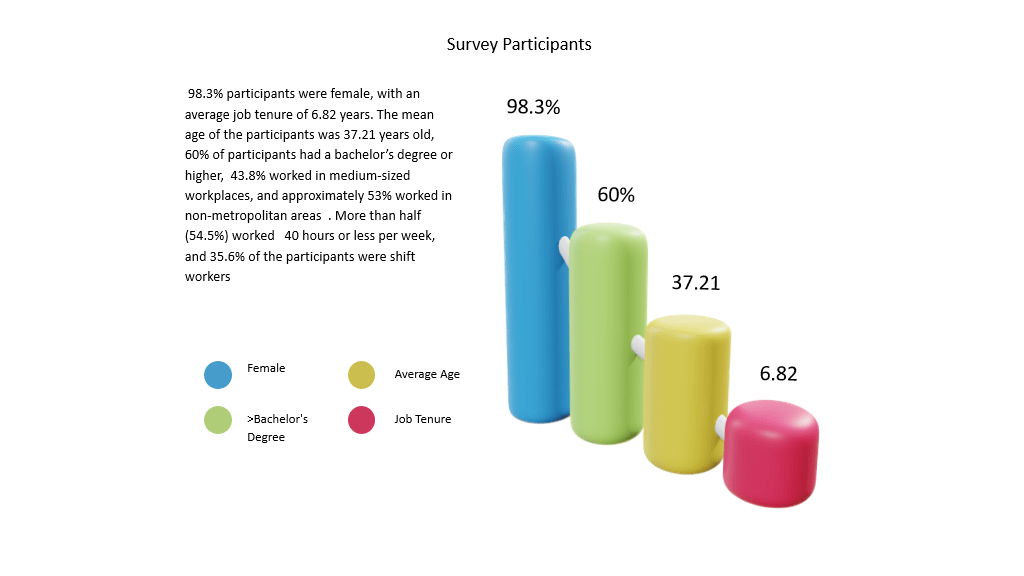
Most participants were female (98.3%), with an average job tenure of 6.82 years (Lee & Lee, 2023). The mean age of the participants was 37.21 years old, 60% of participants had a bachelor’s degree or higher, 43.8% worked in medium-sized workplaces, and approximately 53% worked in non-metropolitan areas (Lee & Lee, 2023). More than half (54.5%) worked 40 hours or less per week, and 35.6% of the participants were shift workers (Lee & Lee, 2023).
The measure used to assess leadership in this study focused on expressing interests in their staff and considering their needs in the workplace (Lee & Lee, 2023). This allows leaders to meet nurses’ preferences, psychological needs, and foster a friendly work environment (Lee & Lee, 2023). By enhancing their passion and immersion in their work, leaders can increase work engagement (Lee & Lee, 2023). Therefore, according to the study, as leaders focus on promoting followers’ well-being and creating a positive workplace environment that fosters respect, recognition, and support among the team, leaders can enhance work engagement (Lee & Lee, 2023).
The study also indicates that the meaning of work was a significant predictor of nurses’ work engagement, stating that employee engagement was enhanced when they perceived their work to be meaningful, valuable, and worthwhile (Lee & Lee, 2023). As a recommendation by the study, team members should evaluate the significance of work in their own lives and are responsible for self-determining a genuine desire through their work to improve work engagement (Lee & Lee, 2023). As leaders, we are encouraged to help our team members link the meaningfulness of their work, such as a sense of fulfillment or having a professional specialty, to their values, and motivation (Lee & Lee, 2023).
Organizational justice can contribute to employees’ positive attitudes toward work engagement (Lee & Lee, 2023). Nurses reported a positive correlation between organizational justice and work engagement when problem-solving processes or compensation criteria are explicitly shared with them. Therefore, organizational justice can be achieved by establishing a work environment with a fair and equitable reward system, shared guidelines, or policy for decision-making, and clear processes for problem-solving, which could lead to nurses’ higher work engagement (Lee & Lee, 2023). In academia, our leaders set the stage by establishing rules and guidelines for both employees and for our students. When it came to a professor penalizing a student for not following the guidelines in the student handbook, Dr. Hart was incredibly supportive of her staff. The same rules apply to her followers. We must possess integrity in our day-to-day activities and adhere to the same expectations that we expect from our students. An example of this would be clinical appearance/dress code. Professors are expected to role model professional behaviors and attire in the clinical setting, just as the students. Professors are held accountable for being the role model, and practicing what we preach in nursing, in every aspect of the phrase.
The study indicates that support from peers is positively associated with nurses’ work engagement (Lee & Lee, 2023). Having a work family or team environment allows the team to work collaboratively to provide emotional support and to be able to work as a team, dividing the tasks to alleviate one another’s workloads. In the nursing pavilion at Texas Lutheran University, Dr. Hart has created a culture where team members mutually support each other, and collaborate to enhance productivity, creating a supportive work environment.
The study demonstrated that nurse managers’ leadership and various resources were key factors for nurses’ work engagement. To promote nurses’ work engagement, nurses themselves should find meaningfulness in their work, such as fulfillment or recognition, as this helps them be more engaged in their work. As a nurse leader at TLU (Texas Lutheran University), Dr. Hart is known for actively knowing and understanding her staff’s personal values. She regularly provides feedback and constructive criticism so that staff can achieve their professional goals and find meaning in their nursing work. Through role modeling behaviors that she expects from staff members, she creates a supportive environment, by continually offering to assist where needed, offering advice and empowering innovation and ideas, offering gratitude when needed, and creating a safe space for learning. The university offers many opportunities for advanced learning, continuing education, and in-services. These opportunities are made known at faculty meetings and our attendance is highly encouraged. Moreover, Dr. Hart uses a supportive leadership style by considering individual nurses’ needs or preferences and addressing nurses’ well-being. These attributes lead to enhanced team performance, enhanced employee satisfaction, and engagement.
Cultivating Wisdom in Leadership
The third study I reviewed was related to incorporating wisdom through narrative. As leaders, one of our primary responsibilities is to maximize the potential of our followers and those that we serve. This skill is honed-in as we are seen encouraging and allowing our team members to discover their own wisdom. We are to cultivate an environment of innovation, empowerment, and of wisdom. As leaders, we do not have all the answers. Through collaboration, we embrace diversity, and diversity of thought fuels wisdom. A third study evaluated just this, the concept of incorporating wisdom for its role in facilitating superior decision-making processes in leadership situations. As leaders in healthcare, we are required to collaborate, especially when there are competing interests, to ensure that we meet organizational goals and not our own self interests.
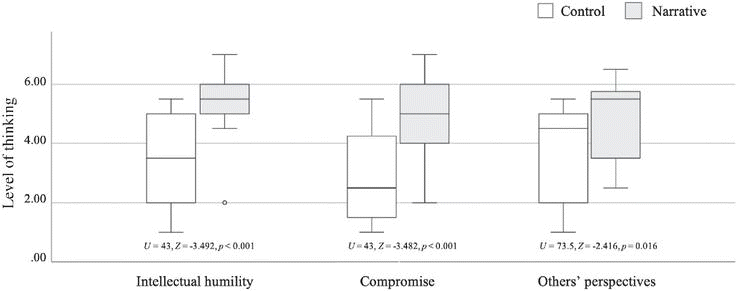
During this study, participants were presented with complex life challenges, requiring them to anticipate the progression of the respective conflict in an effort to assess wise thinking behaviors (Bostanli, 2023). Participants responses are then evaluated based on four key dimensions: intellectual humility, uncertainty management, compromise, and others’ perspectives (Bostanli, 2023). The primary aim of this study was to investigate whether and how reflecting on narratives of exemplary wise leaders can promote wise thinking in leadership. The study hypothesized that reflecting on the narratives of exemplary wise leaders would yield positive effects on leaders’ wise thinking in the areas of compromise, intellectual humility, and an increased capacity to consider others’ perspectives (Bostanli, 2023).
The study consisted of 150 business students from a Germany university during the summer semester of 2021, who were invited to participate in a questionnaire-based study (Bostanli, 2023). This study was promoted as an investigation into leadership problem solving within the courses. After excluding incomplete responses, a final sample of 34 valid responses were obtained (Bostanli, 2023). Participants were instructed to envision a specific workplace conflict situation unfolding before them. Subsequently, the students were presented with a series of specific questions to guide their responses to the situation, and their reflections were content analyzed for various aspects of wise thinking. This research’s main objective was to investigate the impact of narratives on wise thinking in leadership contexts, particularly by employing an interpersonal conflict scenario relevant and relatable to the sample (Bostanli, 2023). Participants were randomly assigned to either the experimental or control group, with the former group responding to the conflict following the narrative process, and the latter group providing responses directly (Bostanli, 2023). The hypothesis stated that the inclusion of narratives would increase wisdom (Bostanli, 2023).
Study findings suggest that wisdom develops with age or as we gain valuable life and professional experiences (Bostanli, 2023). Results indicate that through using narrative thought processes, participants may experience wiser thinking when evaluating or reviewing an unfamiliar perspective, a future-oriented viewpoint, or in other-centered situations (Bostanli, 2023). The use of narrative as a tool has demonstrated its potential to enhance wise thinking in leadership. This study found that promoting wise thinking in leaders during conflict situations could be achieved through narrating and reflecting on narratives of wise leaders (Bostanli, 2023). In this given conflict scenario, recognizing others’ perspectives, particularly the viewpoints of those directly involved in the conflicts, appears to be a natural responsibility of a leader. Just as I learn day-to-day witnessing my colleagues deal with conflict resolution, this study utilizes a similar approach.
In conclusion, the study’s results suggest a promising conclusion that, although the three aspects of wise thinking exhibit varying degrees of positive correlation with the narrative condition, wise thinking as whole can be fostered through narration and reflection on the narratives of exemplary wise leaders. This research innovatively demonstrates that wisdom can be cultivated with age, accumulated experience, and/or specific psychological techniques, and through the proactive use of tools like narrative (Bostanli, 2023). This study promotes management education and proposes that narrative may serve as a mechanism for cultivating wisdom in students or training program participants, who may become future leaders (Bostanli, 2023). As an example of narrative use for enhancing leadership wisdom, our program uses scenario-based questions or case studies to enhance application of didactic learning from the classroom into the real-life and/or clinical setting. We use these scenarios to empower leadership wisdom and manifest it in real-world contexts, just as simulation training in nursing schools is schools as a safe learning environment prior to live clinical practice for students at the hospital setting.
Leadership can be seen as the virtue of inspiring others. Great leaders, like Dr. Hart, not only train their team members, but they are also known to role model expectations. Through role modeling behaviors that she expects from staff members, she creates a supportive environment, by continually offering to assist where needed, offering advice and empowering innovation and ideas, offering gratitude when needed, and creating a safe space for learning. Moreover, Dr. Hart uses a supportive leadership style by considering individual nurses’ needs or preferences and addressing nurses’ well-being. These attributes lead to enhanced team performance, enhanced employee satisfaction, and engagement. Great leaders actively inspire their members to achieve goals and participate as needed to ensure that the organizations’ mission and vision are upheld. Dr. Hart has created a culture where team members mutually support each other, and collaborate to enhance productivity, creating a supportive work environment. Culture transformation is the key to long-term success. As leaders, we are encouraged to help our team members link the meaningfulness of their work, such as a sense of fulfillment or having a professional specialty, to their values, and motivation. There is so much power in your voice and in your actions, so as leaders, we must use that power to lift others up. Leaders should be the reason that their followers feel welcomed, seen, heard, valued, loved, and supported. Facing the ever-evolving challenges in both nursing and in academia, Dr. Hart has successfully utilized narrative and demonstrated its potential to enhance wisdom in leadership, as well as incorporated the use of narrative in the classroom to enhance better understanding of application of classroom learning into the real-world clinical setting. Through her dedication to the university, the nursing profession, her colleagues and followers, and the students, Dr. Hart has created a culture where team members mutually support each other, and collaborate to enhance productivity, creating a supportive work environment.
Graphs
References
Bostanli, L. (2023). Narratives for wise thinking in leadership: An
experiment on the influence of wise leader exemplars’
narratives on wise thinking in leadership. Psychology of
Leaders and Leadership (Print), 26(2), 115–126.
https://doi.org/10.1037/mgr0000141
Kim, E., Lee, J. Y. & Lee, S. E. (2023). Associations among
leadership, resources, and nurses’ work engagement:
findings from the fifth korean Working Conditions Survey.
BMC Nursing, 22(1), 191–191.
https://doi.org/10.1186/s12912-023-01331-8
Malloy, E., Kavussanu, M. & Mackman, T. (2023). The effects
of authentic leadership on athlete outcomes: An experimental
study. Sport, Exercise, and Performance Psychology, 12(1), 29–42.
https://doi.org/10.1037/spy0000307
Great Leaders are Not The Best at Everything (leadershipfirst.net)
 Organizational Leadership
Leave a comment